Medication decisions, screened against your proteins.
Every prescription is tested on an average patient who does not exist. Navi8 uploads your sequence once, then answers every medication question your family has — side-effect risk, dosage, interactions, alternatives — against your own molecular biology.

Sources: FDA, JAMA, NIH Clinical Pharmacogenetics.
Five questions every family asks about a prescription. One engine that answers them from your sequence.
Side-effect risk, rank-ordered
Your prescribed drug is profiled against a safety panel of your own proteins and rank-ordered against the other options in its class — so you and your clinician see where the structural risk sits before the first dose.
Personalized dosage & timing
One-shot dosage and timing guidance that starts from your protein state and the clinical evidence for it — instead of the label’s average adult, adjusted by trial and error.
Multi-drug interaction checks
Prioritized medication pairs are tested for affinity shift, site overlap and displacement on your proteins — the six other medications on the list are part of the question, not an afterthought.
Alternatives, including natural compounds
Same-class and repurposed compounds that bind the same target, plus bounded natural-product candidates — surfaced as discovery for a conversation with your clinician, never as a swap.
Family management
Link a spouse, children and parents to one household. Adherence, symptoms and review flags for every member on one timeline — the same review surface a clinician uses.
Live in daily use
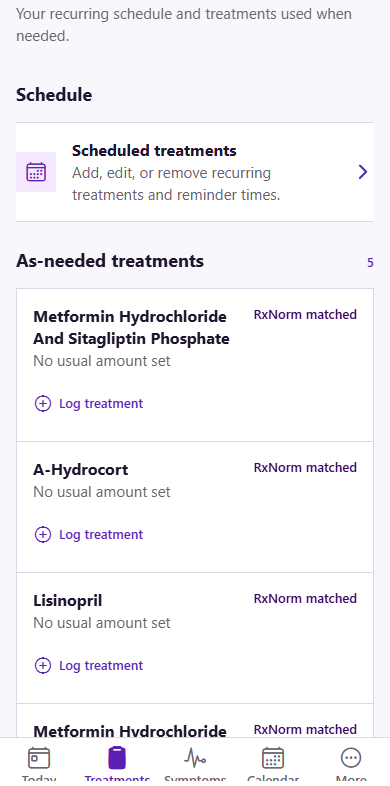
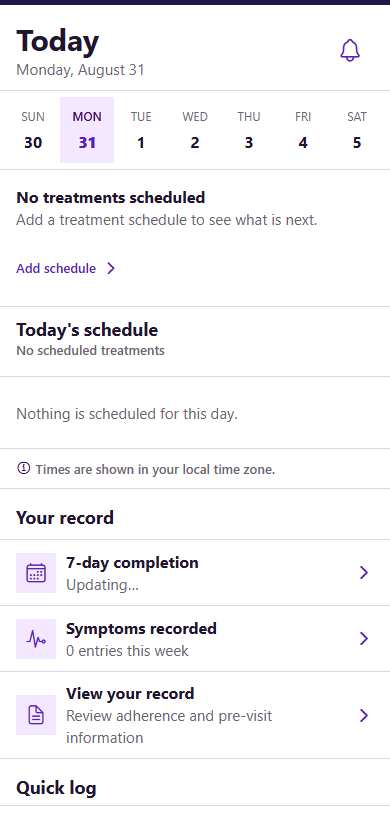
Schedule, reminders, adherence and symptom logging are already in the app — and every entry feeds the review layer so the next screening question is asked with better context.
From a saliva sample to a ranked answer — without ever seeing a sequence editor, a configuration file or a GPU.
Your sequence
Upload whole-genome, exome or a targeted panel. Navi8 keeps only the protein-changing variants that matter.
Your proteins
Variants become patient-specific protein structures — folded once, cached, and reused across every future question.
Your medications
Each drug resolves to a canonical molecule and expands into same-class, research and natural candidates.
Your answer
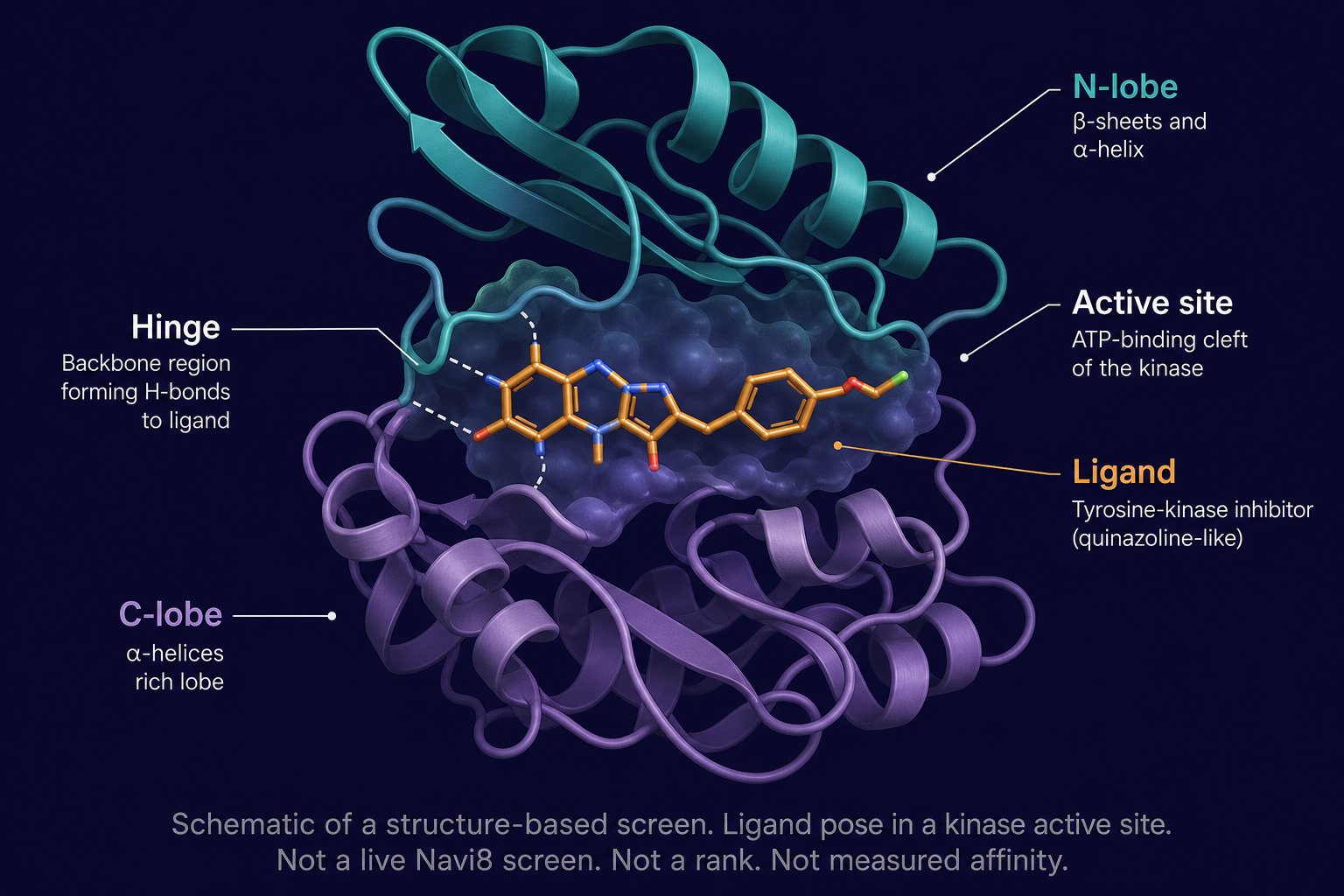
Structure-based screening ranks alternatives, side-effect risk and multi-drug interactions against your proteins.
The expensive step happens once. The tenth question is essentially free.
Navi8 folds only what changed in your proteins — not a whole proteome. That is the difference between four figures of compute per person and single digits, and it is why the second question a family asks costs a fraction of the first.
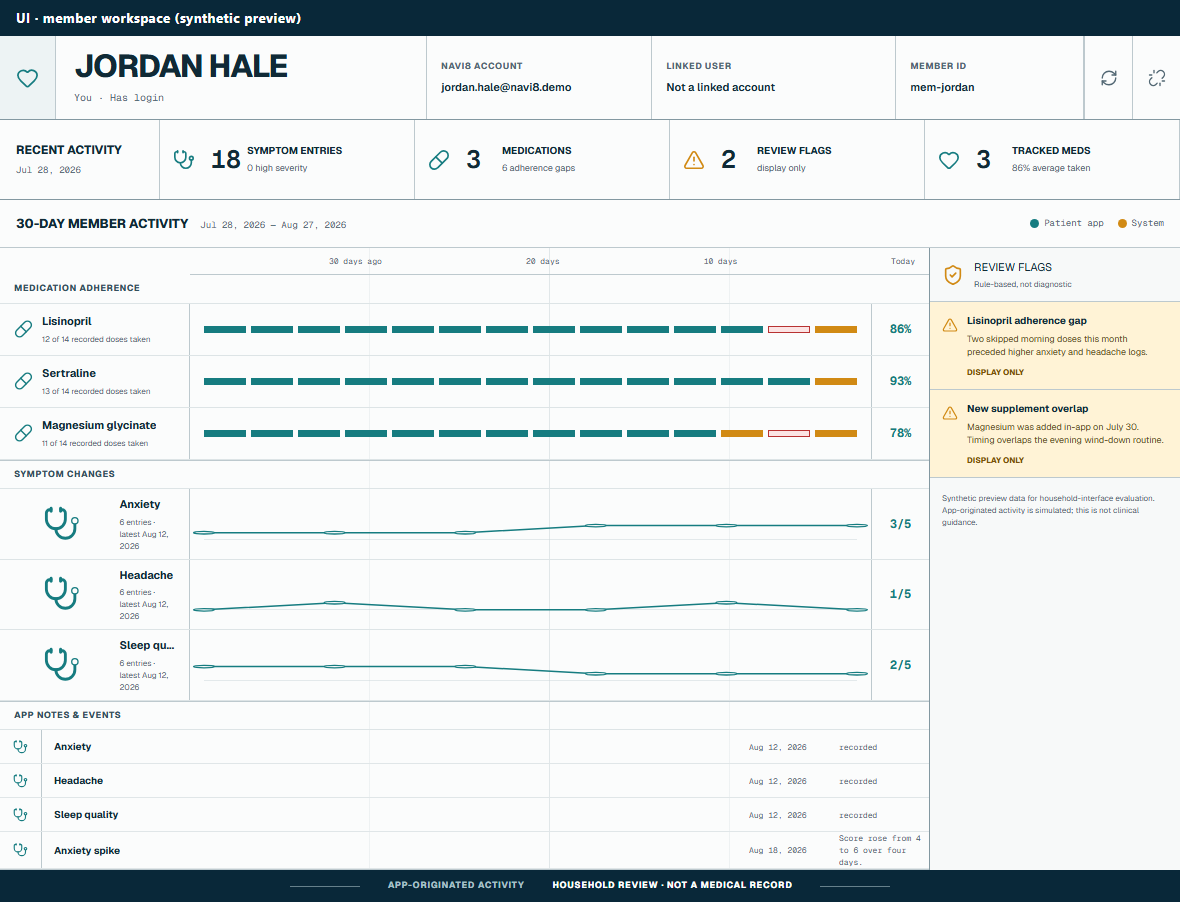
A household, not a single patient.
Medication management is a family job. One household manager links spouses, children and parents, and sees adherence, symptoms and review flags for all of them on one review range — with each member’s screening run against their own sequence.
- Link existing Navi8 accounts by email; each member keeps their own login and data.
- 30-day adherence and symptom timelines for every medication, every member, side by side.
- Rule-based review flags — adherence gaps, supplement overlaps, timing drift — that are display-only, never diagnostic.
- The same view a clinician sees, so a visit starts from shared facts.
The same pipeline serves a family on a phone, a clinician reviewing a panel and an employer measuring a population.
Employers & self-insured plans
Anonymized population insight, adherence and covered vs non-covered Rx spend — and the ROI of prescribing right the first time. Try the employer ROI model.
Employer ROI model CliniciansDecision support & patient management
Visit-prep dashboards, reconciliation, communication and scheduling — plus high-throughput scenario testing for treatment plans on the PHT-CSEIRA pipeline.
For clinicians PartnersPBMs & white-label platforms
Sequence-driven population insight across many employers, on your brand — tracking the cost reductions and outcome gains across an entire book of business.
Partner with Navi8We are raising a $500K SAFE to reach two observable milestones.
$100K committed so far. The round funds compute capacity, production engineering and a third clinical pilot site.